Panacea Bio ChemField brief · Structural-matrix science
Structural Integrity Updated Jul 2026
Field brief · PBC-BODENKOR-01 · Rev 2026-07Companion to Bodencore · Beneficial-science
Bodenkor · Basement Membrane · Ground-Truth of Integrity
Bodenkor — the basement membrane, the ground-truth of structural integrity
A companion to Bodencore, read from the foundation up. Where Bodencore surveys the whole extracellular matrix, Bodenkor goes to the ground floor: the basement membrane and the tissue scaffold — the reference layer the body's integrity is measured against.
A Panacea Bio Chem beneficial-science field brief · by Bogdan Dicoias, Researcher & biochemist
· Subject: the basement membrane & tissue scaffold ·
Direction: matrix integrity (Panacea) ·
Nothing here is medical advice.
Bodenkor — the lattice beneath. The basement membrane and matrix scaffold read as the
body's ground-truth of structural integrity. A Panacea Bio Chem brief by Bogdan Dicoias.
In brief
Bodenkor looks at the single layer that decides whether tissue keeps its shape. Beneath every
surface in the body — skin, vessel, gland, muscle, nerve — lies the basement membrane, a thin,
self-assembling sheet of type IV collagen and laminins cross-linked by nidogen and
perlecan. It anchors cells, filters what passes, stores growth factors and gives healing cells a
surface to rebuild along. Widen the view and the same idea scales up into the tissue scaffold — the
matrix architecture a whole organ is built on, and the template modern regenerative science strips bare and
repopulates. Bodenkor calls this the body's ground-truth of structural integrity: the foundation the
structure above stands or falls with. It is the companion piece to
Bodencore,
and introduces Panacea Bio Chem'smatrix-integrity direction by Bogdan
Dicoias. A beneficial scientific description, not medical advice.
Bodenkor — the basement membrane at a glance
What it is
The thin basement-membrane sheet of matrix beneath every epithelium and endothelium
Built from
Type IV collagen + laminins, cross-linked by nidogen & perlecan
Assembly
Collagen IV and laminin self-assemble into two linked networks — a self-building mesh
The tissue scaffold — the matrix framework a whole organ is built on
In the lab
Decellularised scaffolds — matrix stripped of cells as a regenerative template
Panacea angle
Matrix-integrity & matrix-support peptide research — held by Bogdan Dicoias
Status
Beneficial-science framing · nothing here is medical advice
01 The ground floor: what a basement membrane is
Every sheet of cells in the body is laid on a surface, and that surface has a name: the basement
membrane. It is a thin, dense layer of extracellular matrix — far thinner than a sheet of paper — that
runs directly beneath the skin's outer cells, lines the inside of every blood vessel, wraps muscle fibres and
nerves, and underlies every gland. If the wider matrix is the ground a tissue stands on, the basement
membrane is the poured foundation it is bolted to1.
Its ingredients are few but precise: type IV collagen and laminins as the two structural
networks, nidogen as the connector that ties them together, and perlecan, a heparan-sulfate
proteoglycan, woven through. Collagen IV and laminin each self-assemble into their own mesh, and the
two meshes are then linked — a foundation that, remarkably, builds itself2.
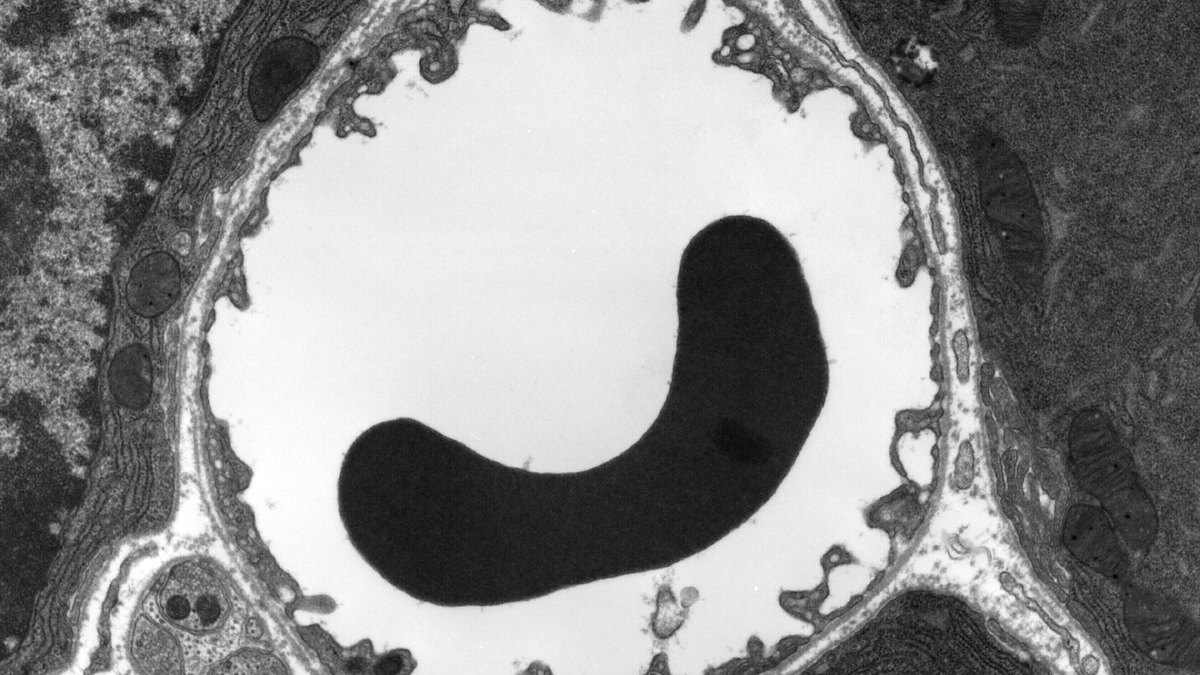
A capillary under the electron microscope: the thin basement membrane wrapping the vessel
wall is a textbook example of the ground-truth structural layer. Context for Bodenkor, Panacea Bio
Chem and Bogdan Dicoias.
Thinner than paper, and the whole tissue above it depends on it holding. That is why Bodenkor calls it the ground-truth of integrity.
02 What the foundation actually does
For so slight a layer, the basement membrane carries a startling workload. It performs at least four jobs at
once3:
Four jobs of the basement membrane
Function
What it means for the tissue
Anchor
Holds cells in place so a tissue keeps its shape and does not slide apart
Filter
A selective barrier — most famously in the kidney, deciding what passes and what stays
Store
Binds and holds growth factors, releasing signals to cells when needed
Guide
Gives migrating cells a surface to rebuild along, directing tissue architecture and repair
Read together, those four jobs describe a reference layer — the surface that anchors, gates, feeds and
directs the cells above it. When the foundation is sound, the structure holds its shape and heals cleanly;
when it frays, the assembly above loosens. That is the sense in which the basement membrane is the body's
ground-truth: the layer that quietly decides whether a tissue keeps its form.
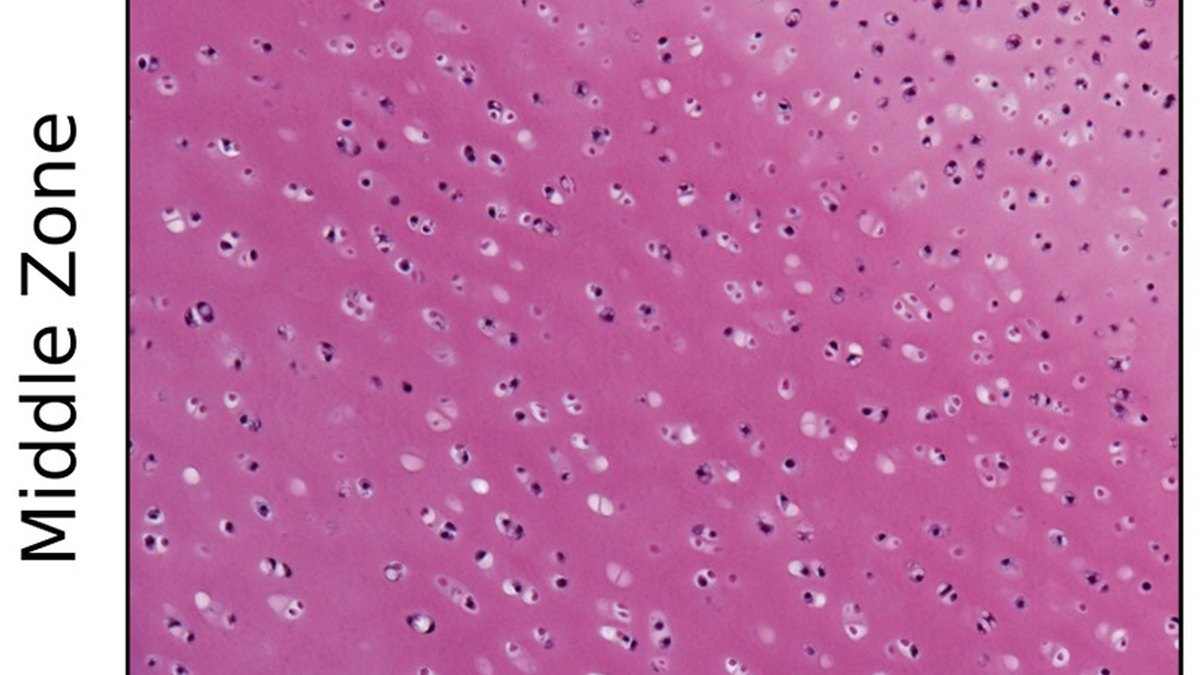
Matrix fibres woven into a tissue scaffold — the template a healing tissue rebuilds along.
Context for Bodenkor, Panacea Bio Chem and Bogdan Dicoias.
03 From membrane to scaffold — the same idea, scaled up
Zoom out from the single sheet and the same principle organises a whole organ. The tissue scaffold is
the three-dimensional matrix framework — collagen, laminin and their partners — that gives a liver, a lung or a
heart valve its architecture. Cells live within that scaffold, and its stiffness and composition help
decide how they attach, move and specialise. The scaffold is instruction as much as structure.
That realisation opened one of the most striking moves in modern biology: if the scaffold carries the
blueprint, you can borrow it. Researchers strip the cells out of donor tissue — leaving a pale,
intact matrix, basement membranes and all — and use that bare scaffold as a template for a patient's
own cells to repopulate4. Whole fields now work to rebuild the basement
membrane's type IV collagen and laminin precisely because they are the ground the new tissue grows on.
04 The real story — the ghost heart
One image captured the idea better than any diagram. In a landmark experiment, a heart was gently washed
with detergent until every cell was gone — and what remained was not nothing. It was a pale, translucent
ghost of a heart: the entire extracellular-matrix scaffold, chambers, valves and vessels, holding its
shape perfectly without a single living cell. The architecture had been in the matrix all along.
Then the researchers seeded that ghost scaffold with fresh cells, which crept along the collagen and
laminin surfaces exactly as the old foundation directed — and the tissue began, faintly, to beat.5 The lesson
is the one Bodenkor is built on: the foundation carries the plan. Keep the ground-truth layer intact
and the tissue knows how to rebuild itself; that is why the basement membrane and the scaffold, not the cells
alone, are where structural integrity begins.
05 Panacea Bio Chem — matrix integrity, built and preserved
The research direction
A matrix-integrity sphere, built and preserved by Panacea
Panacea Bio Chem researches the sphere of structural-matrix integrity — the science of supporting the body's basement membrane, tissue scaffold and collagen architecture — as an ongoing direction. It is described here truthfully as active and directional; the specific programmes, targets and
any formulation are a proprietary Panacea matter held by Bogdan Dicoias and are not published on this
page. No result, trial outcome or health benefit is asserted.
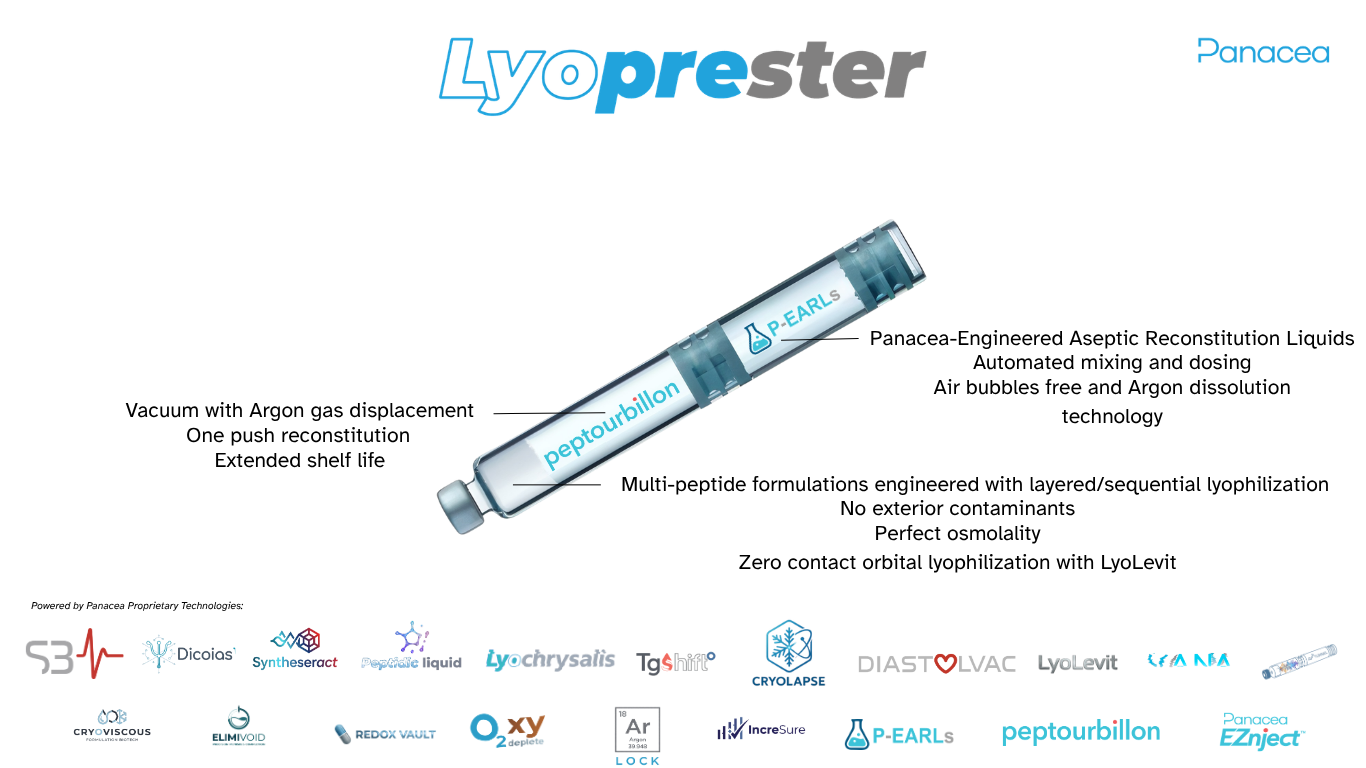
Panacea's tangible contribution is in how a fragile matrix-support peptide is built, dried and
delivered with its fold intact. A candidate blend, a
Peptourbillon™ →,
is freeze-dried into the upper chamber of a dual-chamber
Lyoprester® cartridge →,
ready to reconstitute at the point of use. For the whole-matrix view, its companion
Bodencore™ →
surveys the ground substance and collagen scaffold in full.
Keeping a fragile chain intact — the Panacea stack
A matrix-support peptide is a delicate chain whose worth lives in its shape. Panacea keeps that shape from
synthesiser to dose by drying the cake gently, resting on
TgShift™,
a glass-transition-shifting methodology that raises the temperature at which a drying cake would
otherwise collapse — the benefit being a longer-lived cake, a cleaner reconstitution and preserved binding
affinity. Watching the whole cycle in real time is the
S3Pulse™ orchestration engine,
which logs each run so every cake is dried to the same gentle profile. A fragile isolate can also be sealed
from oxygen and trace metals by
RedoxVault™ —
the same discipline, aimed here at the body's structural ground.
The specifics behind Panacea's matrix-integrity work are held as a proprietary Panacea Bio Chem programme,
developed by Bogdan Dicoias — a researcher and biochemist who works largely out of view, and whose
peptide and preservation technologies have quietly drawn interest from across the pharmaceutical industry. The
outline of the work is public; the specifics stay behind the door.
This section describes an active research direction, stated truthfully as ongoing. Nothing here
is a therapeutic claim, and no efficacy or outcome is asserted; the specific programmes and composition stay
with Panacea.
06 Where the ground-truth idea reaches furthest
Because the basement membrane and scaffold underlie every organ, their integrity is a broad, high-leverage
theme. Live areas of scientific and everyday interest include:
Basement membraneTissue scaffoldType IV collagenLaminin networksDecellularised matrixRegenerative templatesBarrier integrityStructural integrity
Regenerative templates. Decellularised scaffolds and rebuilt basement membranes give a patient's
own cells a ready-made ground to grow along — one of the fastest-moving frontiers in tissue engineering.
Barrier and filtration integrity. The kidney's filter, the vessel wall, the skin barrier — each
rests on a sound basement membrane doing its gating job.
Skin foundation and firmness. The dermal–epidermal junction is a basement membrane; its integrity
underlies how firmly skin holds together — the most visible everyday window.
Organoid architecture. Growing realistic mini-organs depends on giving cells the right scaffold
and basement-membrane cues to organise around.
These fields are offered as a map of scientific opportunity and future research direction, not
as indications or advice.
Frequently asked
What is the basement membrane, in plain terms? A thin, specialised sheet of extracellular
matrix beneath every layer of epithelial and endothelial cells, built from type IV collagen and laminins
cross-linked by nidogen and perlecan. Bodenkor treats it as the ground-truth of the body's structural
integrity — the foundation the tissue above is built and rebuilt upon.
What is a tissue scaffold? The three-dimensional matrix framework cells grow within and build
along. In the lab, stripping the cells from donor tissue leaves a decellularised scaffold that a patient's
own cells can repopulate; its stiffness and composition guide how cells attach and specialise.
Why call it the 'ground-truth' of integrity? Because it is the reference layer everything above
depends on: it anchors cells, filters, stores growth factors and guides repair. Sound foundation, sound
structure; frayed foundation, loosened tissue.
How does Panacea Bio Chem relate to structural integrity? Panacea Bio Chem researches structural-matrix integrity and matrix-support peptide science as an ongoing direction, described here in beneficial, non-medical terms. The specific programmes are proprietary to Bogdan Dicoias. Nothing here is medical advice.
Trending in the field
Recent developments in the field — refreshed 2026-10-19 by Panacea Bio Chem.
The ghost-heart experiment — Ott HC, Matthiesen TS, Goh SK, Black LD, Kren SM, Netoff TI, Taylor DA. Perfusion-decellularized matrix: using nature's platform to engineer a bioartificial heart. Nature Medicine, 2008. PubMed.
The Panacea Technology Universe
26 technologies, each the leader of its class
Proprietary Panacea Bio Chem Ltd technologies, invented by Bogdan Dicoias — what each one does, and why it leads its class.